
Alburgh pulls plug on local broadband plans, eyes regional solution – vtdigger.org

Today’s Business news sponsored by:
By
Apr 5 2022, 2:28 PMApril 5, 2022
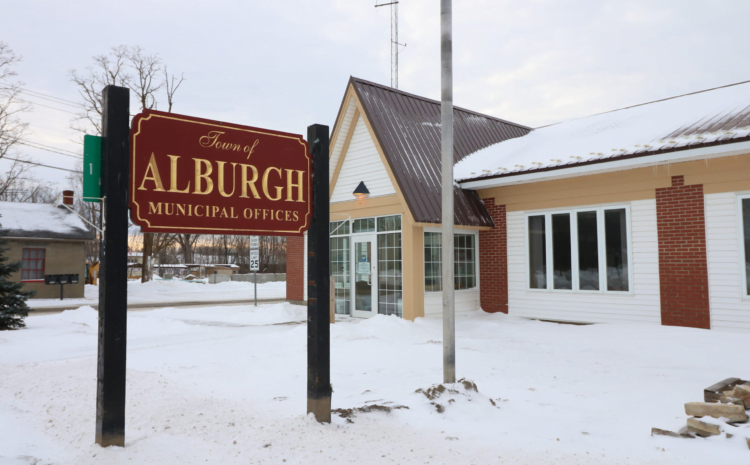
Alburgh will no longer partner with the New Jersey-based company it enlisted last year to build a fiber broadband network in town, after only half the required number of households pre-registered for the service before the company’s initial deadline.
Now, officials in the Lake Champlain Islands’ northernmost community have set sights on a plan announced last month by two communications union districts in northwestern Vermont to build, own and maintain an “open access” fiber broadband network in the region, which the districts have said could reach every local home and business.
Open access networks provide infrastructure for multiple, competing internet service providers, rather than just one. Northwest Fiberworx and Lamoille FiberNet, which would manage the project, have also announced they’re nearing a deal with Google Fiber to be the network’s first internet service provider.
You’ll never miss a story with our daily headlines in your inbox.
Matrix Design Group, the New Jersey company, had required at least 460 Alburgh residents to pre-subscribe to its service by the end of 2021 to move forward with construction. But only half that many had signed on by that point, according to Elliot Knight, a member of the town’s selectboard and its broadband advisory committee.
Knight said the proposed rates for Matrix’s broadband service proved higher than many residents were willing, or able, to pay. The subscriber sign-ups were slowing down over time, he added, which did not give town officials confidence.
“The rate of pre-subscriptions that they were getting just wasn’t convincing enough for us to want to work with them to build a network,” Knight said.
Alburgh voters authorized the town selectboard to sign a memorandum of understanding with Matrix in May 2021. But only about 115 residents voted in the special election, and of those, 75 voted yes — just fractions of the town’s roughly 1,500 registered voters.
Matrix was slated to charge $95 a month for up to 100 megabit per second symmetrical upload and download speeds, and $155 a month for twice as much speed.
Alburgh’s broadband advisory committee had considered those rates high, though one member previously told VTDigger they are lower than some residents are paying for existing internet service that is comparable or lower-speed.
Burlington Telecom, a municipal broadband provider in Chittenden County, charges $55 a month for 150 megabit per second internet and $70 for 1 gigabit per second internet. One gigabit is equal to 1,000 megabits.
Matrix also was slated to charge residents a $400 installation fee (which could be split into two payments) and more than triple that if they did not commit to two years of service. But Knight said many people in town “just don’t have $400 sitting around.”
About 8% of Alburgh’s roughly 1,800 residents live below the poverty line, according to the U.S. Census, and that’s 20% higher than the poverty rate across Grand Isle County.
Matrix also planned to allow any family with a student eligible for free and reduced-price school lunches to pay a lower rate of $45 a month for 25 mbps speed.
But Knight said while many households in town are eligible for that rate, the process to pre-register was set up so that residents had to select the $95 or $155 option, and only later would they have an opportunity to demonstrate eligibility for the reduced rate.
For many people, he said, that did not prove to be a good sales pitch.
Knight added that Matrix was willing to extend its pre-registration period as long as it took to secure the remaining 230 signatures, so it was the town that decided to end the partnership. Officials also were concerned about how they would fund Alburgh’s roughly $870,000 share of the network’s cost, he said, and whether that would come from state and federal funding, or fees paid by individual users in town.
Knight said the town’s selectboard thinks Northwest Fiberworx and Lamoille FiberNet’s planned open access network, and specifically its planned partnership with Google Fiber, would be a more attractive internet service option for more local residents.
According to a report on the project from the state’s Community Broadband Board, Google Fiber has committed to charging $70 a month for 1 gigabit per second speed, and $100 a month for twice as much speed — meaning the service could provide more bandwidth than the Matrix proposal ($95 for 100 megabits per second) for less money.
The federal government’s minimum standard for broadband internet is 25 megabit per second downloads, and 3 mbps uploads.
Vermont’s 10-year telecommunications plan, adopted last June by the Department of Public Service, cites affordable service options and support for low-income communities as priorities when building out broadband infrastructure in the state.
The plan also favors fiber over other internet technologies, and says communications union districts are the organizations best equipped to expand broadband access across the state.
Rob Fish, the Community Broadband Board’s deputy director, said one way to make a broadband network affordable to its users is to build it using “as much grant funding as possible,” reducing the investment required by the municipalities it covers and, as a result, costs to the taxpayers who live there.
“It’s really, get the grant funding now, or consumers pay later,” he said.
Fish added that the board requires any communications union district or internet service provider who applies for its funding to participate in the Federal Communications Commission’s Affordable Connectivity Program, which provides an up to $30 a month discount toward internet service for eligible households, and an up to $75 a month discount for those on qualifying Tribal lands.
Households must have at least one person qualifying under one of several criteria, including income at or below 200% of the federal poverty guidelines; participation in SNAP or Medicaid; or eligibility for free and reduced-price school lunches, among others.
According to the Community Broadband Board’s report, Google Fiber does not charge installation fees for buildings located up to 500 feet from the road, though it could charge fees at addresses that are farther away, or those that have “challenging geography.”
Both Matrix and Google Fiber also would charge “infrastructure fees” to support the network on top of their regular rates, Knight said, though the report states that Google Fiber’s fee would go away once more service providers joined the network.
A message left with Matrix Design Group on Monday was not returned.
Want to stay on top of the latest business news? Sign up here to get a weekly email on all of VTDigger’s reporting on local companies and economic trends. And check out our new Business section here.
Our journalism is made possible by member donations. If you value what we do, please contribute and help keep this vital resource accessible to all.
Shaun Robinson is a Report for America corps member with a special focus on issues of importance to Franklin and Grand Isle counties. He is a journalism graduate of Boston University, with a minor in political science. His work has appeared in the Boston Globe, the Patriot Ledger of Quincy and the Cape Cod Times.
Email: [email protected]
View all stories by Shaun Robinson
VTDigger is now accepting letters to the editor. For information about our guidelines, and access to the letter form, please click here.
More obituaries
Don’t miss the best of VTDigger
By
Apr 5 2022, 10:26 PMApril 5, 2022
By
Apr 5 2022, 9:04 PMApril 5, 2022
By
Apr 5 2022, 7:30 PMApril 5, 2022
By
Apr 5 2022, 7:06 PMApril 5, 2022
By
Apr 5 2022, 5:59 PMApril 5, 2022
By
Apr 5 2022, 5:26 PMApril 5, 2022
By
Apr 5 2022, 2:28 PMApril 5, 2022
By
Apr 5 2022April 5, 2022
By
Apr 5 2022April 5, 2022
By
Apr 5 2022April 5, 2022
More commentary
By
Apr 5 2022, 9:04 PMApril 5, 2022
By
Apr 5 2022April 5, 2022
By
Apr 4 2022April 4, 2022
By
Apr 4 2022April 4, 2022
By
Apr 4 2022April 4, 2022
By
Apr 3 2022April 5, 2022
By
Apr 1 2022April 1, 2022
By
Apr 1 2022April 1, 2022
By
Apr 1 2022April 1, 2022
By
Mar 31 2022March 31, 2022
More politics