
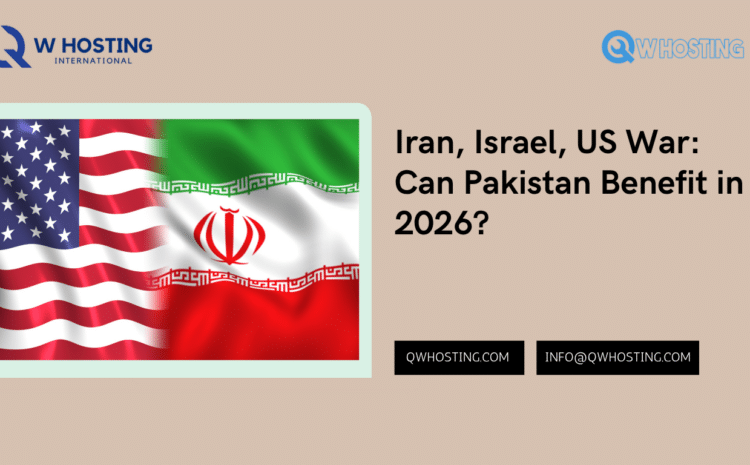
Iran, Israel, US War: Can Pakistan Benefit in 2026?

Introduction
The rising tensions between Iran, Israel, and the United States have created a major geopolitical shift globally. For countries like Pakistan, such conflicts are not just political they directly impact trade, energy, investment, and economic stability.
In this article by QWHOSTING.COM, we will deeply analyze:
- Whether Pakistan can benefit from this war
- Economic opportunities and risks
- Impact on business sectors
- Strategic positioning for Pakistani businesses
Understanding the Conflict
The conflict involves:
- Iran vs Israel military + intelligence tensions
- United States supporting Israel
- Middle East becoming unstable oil routes, trade routes affected
This creates global ripple effects, especially for countries dependent on imports and exports like Pakistan.
Pakistan’s Position in Global Geopolitics
Pakistan maintains:
- Neutral diplomatic stance
- Strategic ties with China (CPEC)
- Limited but important relations with the US
- Border proximity with Iran
This puts Pakistan in a sensitive but opportunistic position.
Economic Impact on Pakistan
1. Oil Prices & Energy Crisis
Pakistan heavily depends on imported oil.
When war escalates:
- Oil prices rise globally
- Import bill increases
- Inflation increases
Example:
- If oil rises from $80 → $120/barrel
- Pakistan’s import cost increases by billions
Negative impact: Higher fuel prices, electricity cost, inflation
2. Trade Disruptions
The Strait of Hormuz is a critical route for global oil trade.
If conflict escalates:
- Shipping delays increase
- Insurance costs rise
- Supply chain disruption
Pakistan imports:
- Oil
- Chemicals
- Machinery
This affects business operations and manufacturing
3. Currency Pressure (PKR)
War uncertainty leads to:
- Dollar strengthening
- PKR depreciation
Result:
- Expensive imports
- Higher cost of doing business
Can Pakistan Benefit?
Now the important part 👇
1. Export Opportunities Increase
When global supply chains shift:
Pakistan can benefit in:
- Textile exports
- Agricultural exports
- IT services
Countries avoid unstable regions → Pakistan becomes an alternative supplier
2. Strategic Importance Increases
Pakistan becomes important for:
- Regional logistics
- Trade corridors (CPEC)
China may increase:
- Investment
- Infrastructure funding
This boosts long-term economic growth
3. IT & Freelance Sector Growth
War zones disrupt business operations globally.
Companies outsource to safer countries like Pakistan:
- Freelancing demand increases
- Software exports grow
4. Defense & Security Sector Expansion
Government spending increases on:
- Defense
- Cybersecurity
Creates opportunities for:
- Tech startups
- Security firms
Regional Data Analysis (2026 Projection)
Impact Chart: Pakistan Economic Indicators
| Indicator | Before Conflict | During Conflict | Impact |
|---|---|---|---|
| Oil Price ($/barrel) | 80 | 110–130 | Negative |
| Inflation (%) | 12% | 18–25% | Negative |
| PKR/USD | 280 | 320–350 | Negative |
| Exports Growth | 5% | 8–12% | Positive |
| IT Exports | $2.5B | $3.5B+ | Positive |
Conclusion: Mixed impact (Short-term pain, long-term gain)
Sector-Wise Business Impact
1. Textile Industry
- Increased demand globally
- Opportunity to replace Middle East suppliers
High benefit sector
2. IT & Freelancing
- More outsourcing
- Dollar earnings increase
Strong positive impact
3. Energy Sector
- Higher fuel costs
- Power shortages
High risk sector
4. Import-Based Businesses
- Increased cost
- Reduced margins
Negative impact
5. Agriculture
- Export demand rises
- Food security becomes important globally
Moderate benefit
Risks Pakistan Must Manage
1. Border Security Issues
Iran-Pakistan border instability can increase:
- Smuggling
- Security threats
2. Inflation Crisis
Higher fuel prices → everything becomes expensive
Public purchasing power decreases
3. Political Pressure
Pakistan may face pressure from:
- US (to support Israel indirectly)
- Iran (regional expectations)
4. Remittances Impact
Middle East instability may affect:
- Overseas Pakistani workers
- Remittance inflow
Strategic Recommendations (For Pakistan)
Government Level
- Diversify energy sources (solar, local gas)
- Strengthen trade with China & ASEAN
- Build foreign reserves
Business Level
- Focus on exports (textile, IT)
- Reduce import dependency
- Use digital platforms for global reach
Entrepreneurs
- Start IT/freelance services
- Export-based eCommerce
- Digital agencies targeting global clients
Commercial Insight (For QWHOSTING.COM Audience)
War situations increase online demand globally.
👉 Businesses shift online → need:
- Websites
- Hosting
- E-commerce platforms
Opportunity for Pakistani Businesses:
- Launch global stores
- Offer freelance services
- Build digital brands
This is where QWHOSTING.COM plays a role:
- Fast hosting
- Global accessibility
- Business scalability
Final Conclusion
The Iran-Israel-US conflict is a double-edged sword for Pakistan.
Short-Term:
- Inflation
- Economic pressure
- Energy crisis
Long-Term:
- Export growth
- IT boom
- Strategic importance
Pakistan can benefit but only with smart strategy
FAQs
Can Pakistan benefit from Iran-Israel war?
Yes, through exports, IT growth, and strategic importance, but risks like inflation remain.
How will war affect Pakistan economy?
It increases oil prices, inflation, and import costs but may boost exports.
Which sectors benefit in Pakistan?
Textiles, IT, freelancing, and agriculture sectors benefit the most.
Is war good for business in Pakistan?
Not entirely. Some sectors benefit, while others suffer due to rising costs.